

Online gambling is illegal in Indonesia because the country prohibits gambling as a matter of criminal law and public policy—not simply because casino websites lack local licenses. The prohibition extends to online slots, casino games, sports betting, poker and other wagering activities. Indonesia's rules reflect longstanding objections to gambling, reinforced by concerns about household debt, addiction, fraud and illegal financial networks. A gambling site being based overseas, accepting US dollars or remaining accessible through a mobile phone does not make its services legal for someone gambling from Indonesia.
A Nevada sportsbook license means nothing under Indonesian law. That matters to Americans visiting Bali or living in Jakarta: the rules of their home state do not travel with them.
What Makes Online Gambling Illegal Under Indonesian Law?

Two sets of rules apply to different conduct. The Kitab Undang-Undang Hukum Pidana (KUHP), or Indonesian Criminal Code, covers gambling-related conduct. The Electronic Information and Transactions Law (UU ITE) addresses electronic information and documents containing gambling content. A player, casino operator and promoter may face different allegations.
The Criminal Code: Articles 426 and 427
Indonesia's revised Criminal Code, enacted through Law No. 1 of 2023 and effective in 2026, includes Articles 426 and 427. Article 426 addresses conduct such as offering or providing opportunities for gambling without authorization, including as a business. Article 427 addresses participation in gambling held without permission. Prosecutors must establish which conduct occurred and which statutory elements it satisfies.
Under these provisions, the maximum imprisonment described for Article 426 is nine years, while Article 427 provides for up to three years. Fines are defined using the Criminal Code's fine categories. Neither maximum is an automatic sentence.
Older explanations often cite Article 303 of the former Criminal Code, Law No. 7 of 1974 on gambling control and Government Regulation No. 9 of 1981. They remain relevant to the history of Indonesia's prohibition, but current legal analysis should account for the 2026 implementation of the revised KUHP rather than relying only on older article numbers.
The Electronic Information and Transactions Law: Articles 27(2) and 45(3)
Law No. 1 of 2024 amended the UU ITE. Article 27(2) prohibits intentionally and without right distributing, transmitting or making accessible electronic information or documents containing gambling content. Article 45(3) sets a maximum of ten years' imprisonment and/or a fine of up to Rp10 billion for conduct meeting that provision.
That is not the standard penalty for opening a gambling website or placing a bet. Article 27(2) concerns specified electronic-content conduct. A player's potential liability must be assessed under the applicable gambling offense and the circumstances, while advertising, affiliate promotion or operating a platform may raise separate issues.
Why Indonesia Prohibits Gambling Rather Than Licensing Online Casinos

Religious values and the country's legal identity
Indonesia has the world's largest Muslim population, and Islamic teaching prohibits maysir—gambling—as haram. Religious authorities and civil-society organizations, including the Indonesian Ulema Council (MUI), Muhammadiyah and Nahdlatul Ulama, form part of the broader social context in which gambling is debated. But Indonesia is not governed solely by Islamic religious law, and it would be inaccurate to say that a religious ruling itself is the criminal statute applied to every resident.
The state ideology, Pancasila, and Indonesian public-policy traditions also emphasize social responsibility and public morality. Gambling restrictions apply across the country, including to non-Muslims and foreign visitors. The ban applies regardless of the gambler's religion.
Household debt, addiction and consumer harm
Online gambling changes the conditions under which people wager. A smartphone makes betting available at any hour; digital deposits reduce the friction of placing another bet; and fast-moving slot or sports-betting products can encourage repeated play. When losses accumulate, households may face depleted savings, borrowing, conflict and difficulty meeting ordinary expenses.
Not everyone who gambles develops an addiction. Yet rapid repeat betting, household losses and minors’ exposure help explain why authorities favor restrictions over a licensed online-casino market.
Fraud, illegal payments and cross-border networks
Unlicensed gambling sites may operate through offshore companies, foreign servers, intermediaries and rapidly changing domains. Payment chains can involve bank accounts, e-wallets and QRIS, Indonesia's standardized QR payment system. Banks, e-wallets and QRIS also handle legitimate purchases. Investigators focus on their use for gambling deposits and illicit proceeds.
Indonesia's Financial Transaction Reports and Analysis Center (PPATK) monitors suspicious financial flows, while police investigate possible criminal networks. Money laundering and scams can accompany gambling operations, although they are separate offenses that require their own evidence. Cross-border investigations can involve jurisdictions such as Cambodia or the Philippines, but the location of a server alone does not establish that a particular company committed a crime.
How Large Is Indonesia's Online Gambling Problem?

PPATK reported Rp86.82 trillion in online-gambling fund turnover across 467.32 million transactions in January–June 2026. It separately identified Rp22.05 trillion in deposits across 226.76 million transactions through bank accounts, electronic wallets and QRIS. These are different measures: turnover is not the same as gambling losses, operator profit or the number of unique gamblers.
PPATK also reported Rp1.02 trillion in deposits linked to betting around the 2026 FIFA World Cup, covering a period from mid-June through July. Sports betting remains prohibited regardless of the event.
Who Can Face Penalties: Players, Operators or Promoters?
| Activity | Legal concern | Important distinction |
|---|---|---|
| Placing bets on a gambling site | Participation in prohibited gambling under applicable criminal-law provisions | Being a customer is different from distributing gambling content. |
| Running an online casino or sportsbook | Providing or organizing gambling, potentially alongside electronic-content offenses | Business activity, control and evidence matter. |
| Publishing gambling promotions or affiliate links | Possible UU ITE liability for intentionally making gambling content accessible | Not every neutral discussion of gambling is an advertisement. |
| Handling gambling-related payments | Potential financial, fraud or money-laundering investigations | A payment method itself is not illegal merely because criminals misuse it. |
Operators and players face different offence elements. Discussion of a casino, without more, does not meet the UU ITE gambling provision; prosecutors must establish the conduct, intent and role under the law in force at the time. Indonesian law can also apply to foreign nationals for conduct within the country.
How the Government Enforces the Ban

Indonesia combines online-content controls, police investigations and financial monitoring. The Ministry of Communication and Digital Affairs (Komdigi, formerly commonly referred to as Kominfo) restricts access to gambling websites and other prohibited digital content. The Indonesian National Police (Polri) and its Criminal Investigation Agency (Bareskrim) pursue suspected operators and related offenses. PPATK provides financial intelligence; the Financial Services Authority (OJK) works with banks on risk controls; and Bank Indonesia has a role in the wider payment-system environment.
Authorities also trace payments, investigate promotional networks and seek asset recovery. In March 2026, OJK said it had instructed banks to conduct enhanced due diligence and/or block 33,252 accounts suspected of online-gambling involvement. That was an account measure, not a list of convictions.
Promotions circulate through search, social media, messaging apps and influencers on platforms including YouTube, TikTok, Telegram and X. Enforcement therefore extends to distribution channels, not just casino domains.
Why Are Gambling Websites Still Accessible If Gambling Is Illegal?
A blocked domain can reappear under another address. Offshore operators can replace blocked domains, distribute links through social channels or use new payment intermediaries. Regulators must identify a new site or transaction network, gather evidence and coordinate with providers, while operators can move infrastructure more quickly. The resulting cat-and-mouse cycle does not create a legal exception.
Neither a working app, successful deposit nor offshore license establishes that gambling from Indonesia is lawful.
What US Visitors and Expats Should Know
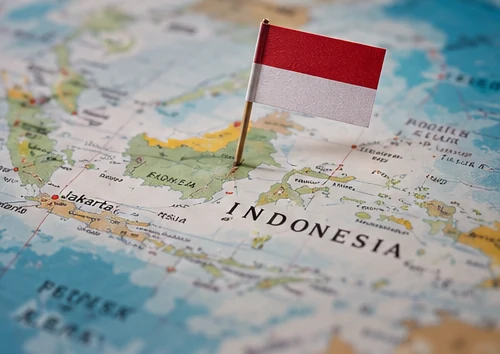
Gambling rules in the United States are fragmented by state, product and licensing regime. Indonesia follows a substantially different model. Someone accustomed to regulated sportsbooks in Nevada, New Jersey or another US jurisdiction should not assume the same services are lawful when traveling to Indonesia.
- In Bali or Jakarta: Do not treat a US or offshore casino license as authorization to gamble locally.
- On a US-based account: The location and legal status of the operator do not settle whether placing a wager from Indonesia is lawful.
- For crypto or e-wallet deposits: Changing the payment method does not remove the underlying gambling prohibition.
- For online content creators: Promoting gambling to Indonesian users may create legal exposure distinct from neutral reporting or analysis.
- If an account is frozen or authorities contact you: Preserve records and consult qualified Indonesian legal counsel rather than relying on generic online penalty summaries.
Could Indonesia Legalize or Regulate Online Gambling Instead?
Licensed markets elsewhere use age checks, tax collection and consumer safeguards. Advocates say regulation can bring betting into view; critics worry it can encourage more gambling. Neither argument establishes how legalization would work in Indonesia.
Indonesia has chosen prohibition, not a general online-casino licensing framework. OJK's regulation of banks and digital financial services should not be mistaken for authorization of gambling operators. A future policy change would require an identifiable legal reform; a rumor about tax revenue or a newly accessible website is not evidence of legalization.
Frequently Asked Questions
No. Online casinos fall within Indonesia's gambling prohibition. A foreign license or offshore domain does not supply Indonesian authorization.
Yes. Betting on soccer, including major events such as the FIFA World Cup, is not exempt simply because it concerns a sport rather than a casino game.
Foreign citizenship does not create an exemption from Indonesian law. Travelers should assess conduct under the law of the place where they are located, not only the rules of their home state.
Criminal exposure is possible under applicable gambling provisions, but the charge and outcome depend on the person's conduct and the evidence. The ten-year UU ITE maximum concerns specified electronic-content conduct and must not be automatically assigned to every player.
Promotional content can raise legal issues under the UU ITE, particularly where a person intentionally distributes or makes gambling-related electronic content accessible without right. Individual cases require analysis of the precise conduct.
No. A tool that changes connectivity or a payment method does not repeal the gambling ban. Technical access and legal permission are different questions.
Islamic objections to gambling are an important cultural factor, but the enforceable nationwide prohibition comes from Indonesian state law. It applies regardless of a person's religion.