
In some Southeast Asian gambling networks, cryptocurrency links casino accounts to exchanges, stablecoin wallets and local-currency payouts. The transfer visible on a blockchain is often only one step. Intermediaries may control the deposit, the gaming balance and the eventual cash-out, making responsibility difficult to establish when a payment fails or funds are misused.

In Indonesia, regulated crypto-asset trading does not make online gambling lawful. The token, the betting operator and the payment recipient raise separate legal questions.
Why crypto matters to regional gambling payment networks

Conventional online betting payments rely on banks, cards, e-wallets or local transfer methods. Cross-border operators may face currency conversion, settlement delays, account restrictions and fragmented banking access. Cryptocurrency introduces a different settlement layer: a wallet can transfer a digital asset on a blockchain without the same correspondent-banking chain. Yet converting that asset into rupiah, baht or another fiat currency still depends on exchanges, liquidity providers, OTC brokers or other counterparties.
A casino can accept crypto yet rely on third-party payment processors, affiliates or virtual asset service providers (VASPs) to credit accounts and arrange local payouts. On-chain speed says little about how quickly a player can actually withdraw.
The payment chain: from deposit to cash-out
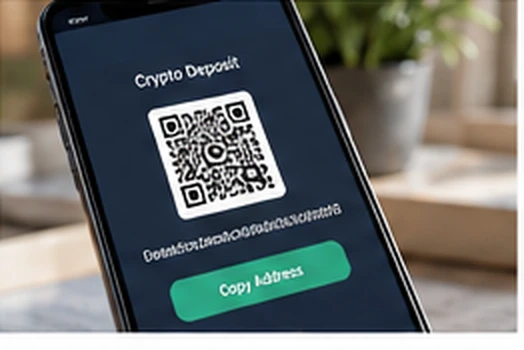
In a hypothetical payment chain, a bank or e-wallet deposit reaches an intermediary that converts the funds into USDT. The operator then credits gaming chips or points to an internal account. Withdrawal may run through a different provider, possibly in another currency. The chain illustrates how settlement can work; it does not describe a specific operator.
| Stage | What changes hands | Question that matters |
|---|---|---|
| Funding | Fiat money or crypto assets | Who receives the initial deposit? |
| Conversion | Fiat-to-crypto or crypto-to-fiat value | Which exchange, OTC broker or VASP handles conversion? |
| Transfer | On-chain tokens or internal ledger entries | Is there a verifiable blockchain transaction? |
| Gaming balance | Casino chips, credits or betting account balance | Does the account represent a real claim on funds? |
| Withdrawal | Crypto transfer, bank payout or e-wallet credit | Who controls settlement, limits and disputes? |
A blockchain explorer records transfers to an address. The casino’s internal ledger determines whether a player received credit, and the address may belong to an exchange or processor rather than the advertised operator. A transaction hash cannot answer those questions.
Why USDT and TRON recur in investigations

Tether (USDT) is a US-dollar-referenced stablecoin. TRON is a blockchain network, and TRC-20 is a token standard used for USDT transfers on that network. Ethereum and its ERC-20 standard offer another environment for tokens; Bitcoin (BTC) is a separate cryptocurrency with different settlement characteristics. These terms should not be treated as interchangeable.
The United Nations Office on Drugs and Crime (UNODC) has documented the use of USDT on TRON in illicit online gambling and associated underground banking in East and Southeast Asia. Stablecoin denomination can reduce exposure to the price swings of assets such as Bitcoin, while network fees and transaction processing characteristics affect operational costs. Stablecoins nevertheless introduce issuer, custody, depegging and freezing risks. Neither USDT nor TRON is inherently an illegal gambling product.
A TRC-20 transfer sent to an incompatible destination can be lost. Check the receiving network and wallet controller before sending; a familiar token logo tells you little about the casino behind the address.
The intermediaries behind gambling settlements

Payment gateways, affiliates and white-label operators
A payment gateway may collect deposits for several brands, while a white-label casino supplies technology to multiple websites. Affiliate agents recruit or refer customers, and mirror websites may preserve access when domains change. As a result, several apparently unrelated gambling sites can share payment infrastructure. The site brand, account operator, processing company and beneficial owner may be different entities.
OTC brokers, nested exchanges and underground banking
Over-the-counter (OTC) brokers arrange asset conversion outside a conventional public order book. A nested exchange accesses services provided by another exchange while serving its own customers. Such structures can support legitimate liquidity needs, but inadequate know-your-customer (KYC) controls, opaque beneficial ownership and weak transaction monitoring create opportunities for abuse. Underground banking and informal value-transfer networks can also connect digital assets to cash and local bank accounts.
Money mules and nominee accounts add another layer of risk. A transfer to a personal account may not identify the actual operator. A payment instruction that changes recipients frequently, demands off-platform communication or promises guaranteed withdrawals deserves particular scrutiny.
Indonesian deposits and the crypto settlement question

Crypto-exchange oversight and gambling enforcement are separate in Indonesia. PPATK lists bank accounts, e-wallets and QRIS among deposit channels, but its national totals do not show what share later moved through virtual assets. Follow the payment path before calling a deposit crypto-enabled. The banking analysis contains the totals and channel breakdowns.
Regulation of crypto-asset trading also changed: on 10 January 2025, oversight of digital financial assets including crypto assets transferred from Bappebti to Otoritas Jasa Keuangan (OJK), with Bank Indonesia (BI) taking responsibility for relevant financial derivatives within its remit. OJK subsequently issued updated digital-financial-asset rules in 2025. Oversight of a crypto exchange is not an authorization for an offshore betting site to accept Indonesian customers.
What would link a crypto transfer to an operator?
A casino, payment processor, exchange and wallet provider perform different roles. Linking a transfer to an operator requires records that connect the blockchain address with an exchange account, named counterparty or local-currency payout. Regional risk reports can point investigators toward a lead, but they cannot supply that transaction trail.
Regional locations and cross-border operating models are mapped in our Southeast Asia network analysis.
How gambling balances can obscure the source of funds
Investigators look for deposits that move through several accounts or return as supposed winnings. Transfers among related accounts, collusive betting and repeated conversions can obscure the source of funds. Each pattern needs supporting account and transaction records before it can be treated as laundering.
UNODC has documented illicit gambling platforms and underground exchanges in some of these schemes, alongside links between parts of the regional casino economy, cyberfraud and human trafficking. These findings concern specific networks; they do not describe ordinary cryptocurrency users or licensed providers.
What an on-chain record leaves out
Public ledgers show addresses, timestamps, token amounts and transaction hashes. Analytics firms such as Chainalysis and TRM Labs can group addresses by observed patterns, but an address alone does not name its owner. Exchange KYC files, bank records, domain registration and the casino’s own ledger can help connect transfers to people and businesses.
Financial intelligence units (FIUs), regulators and law-enforcement agencies may need records from several countries to follow a payment from deposit to cash-out. A transaction pattern is a lead for investigation; account and ownership records supply the context.
Before sending a crypto deposit
| Risk | Why it matters | Practical verification |
|---|---|---|
| Network mismatch | Tokens sent over an unsupported chain may be lost | Confirm token contract and network independently |
| Unclear operator identity | A payment address may not belong to the advertised brand | Check corporate identity and legal status |
| Withdrawal restrictions | Deposits may be accepted while payouts are delayed or denied | Review enforceable terms; avoid unlicensed operators |
| Stablecoin and custody exposure | Issuer, platform or custodian problems can block redemption | Understand who holds keys and redemption rights |
| Irreversible transfers | Blockchain settlement generally lacks card-style chargebacks | Never assume a transaction can be reversed |
| Local legal exposure | Crypto trading rules do not legalize gambling | Check applicable Indonesian law and official guidance |
Controls for providers and investigators
Virtual-asset providers can review customer identity, beneficial ownership, transaction history and destination accounts together. FATF standards cover KYC, sanctions screening, suspicious-transaction reporting and other AML/CFT controls for VASPs; local rules determine which apply to each provider.
A bank record may show rupiah entering an exchange. The exchange can identify a wallet account, while only the casino’s ledger can confirm the gaming credit. Investigators need records from each part of that chain.
Frequently asked questions
Why do some networks use USDT instead of Bitcoin?
USDT is designed to track the US dollar, which can make accounting and settlement less exposed to token-price volatility than Bitcoin. Actual cost, speed, liquidity and redemption risk depend on the network and intermediary.
Can an on-chain payment prove that a gambling withdrawal is legitimate?
No. It can establish that a token transfer occurred, not that the operator was licensed, the underlying activity lawful or the payout properly attributed to a customer.
Are QRIS and e-wallet gambling deposits cryptocurrency transactions?
Not by themselves. QRIS is an Indonesian QR payment standard, and e-wallet payments may be denominated in rupiah. A separate conversion stage would be needed before value moves as a crypto asset.