
For an Indonesian child, an online gambling promotion may not look like an advertisement at all. It can appear as a funny video, a comment beneath a YouTube clip, a familiar influencer’s post, or a harmless-looking game recommendation. The decisive moment often comes later: a link, profile, or redirected page leads away from the original content to an online betting service. That gap between what a child first sees and where the content ultimately leads is one reason gambling advertising remains difficult to identify and control.
Indonesia prohibits gambling and its promotion, yet the promotional ecosystem continues to operate across digital platforms. In a November 2025 investigation, AFP documented paid advertisements on Facebook, Instagram and Threads that appeared to concern video games, fruit or health advice but redirected users to gambling websites. The investigation established deceptive advertising aimed at Indonesian users; it did not establish that every advertiser deliberately targeted minors. Children can nevertheless encounter material distributed in environments they also use.

Why exposure matters even when an advertisement is not aimed at children
An impression tells us that a post entered a child’s feed. Campaign settings can show whom an advertiser targeted; click, registration and deposit records describe later actions. Each stage needs its own evidence.
But the underlying problem is substantial. Indonesia’s Financial Transaction Reports and Analysis Center (PPATK) reported in July 2024 that approximately 80,000 online gambling participants were younger than 10, based on its reported demographic figures. Another approximately 440,000 were aged 10–20; that category includes adults aged 18–20 and must not be described as exclusively children. These are participation estimates, not measurements of how many children saw advertisements or evidence that advertising caused the reported activity.
The routes from everyday content to gambling sites
Short videos, social feeds and paid placements
Instagram Reels, Stories, Facebook feeds, Threads posts, TikTok videos and YouTube content bring entertainment and advertising into the same scrolling experience. Paid placements may be clearly labelled, but deceptive promoters can present their material as general-interest content. AFP’s investigation found ads that initially resembled gaming or health information before redirecting to betting destinations. A child who recognises the first screen as entertainment may not recognise the commercial purpose of the next click.
An ad appearing in a child’s feed does not, by itself, show that the platform targeted the child. Broad delivery, reposts and followed accounts can expose minors to material intended for adults.
Influencers, viral entertainment and borrowed credibility
Promotional material can be inserted into entertainment posts, memes, viral clips and accounts with established followings. Indonesia’s Ministry of Communication and Digital Affairs (Komdigi) described this tactic in November 2024 while announcing action against influencer accounts associated with online gambling promotion. The ministry noted the use of false accounts, coded terms and attractive entertainment packaging.
Influencer marketing adds a social layer to exposure. An endorsement, even an indirect one, can make a link appear more familiar than an anonymous banner. Fake testimonials, claims of easy wins, screenshots presented as proof of a jackpot and comments suggesting that “everyone is trying it” are forms of social proof. Such claims should be treated as marketing messages, not evidence that winning is likely.
Comments, spam networks and profile links
Not every gambling promotion is a conventional advertisement purchased through an ad manager. Operators and affiliates can also place links or coded invitations in public comment sections, including beneath unrelated videos. Automated accounts can multiply the same message across different posts and platforms. In July 2026, Komdigi described cross-platform gambling-comment spam involving Instagram, TikTok, Facebook, X and YouTube and urged platforms to detect inauthentic accounts more effectively.
A gambling link can surface beneath a video about something else entirely. It may sit in a profile biography or behind a redirect, with no gambling logo in sight.

Mobile games and gambling-like design
Mobile games deserve separate attention. A simulated slot machine or reward challenge can resemble betting, but random rewards alone do not make a game a real-money gambling service. Check whether users stake something of value, what they can win and where the link or payment flow leads.
How disguised promotions move people from attention to action
An ordinary-looking post can lead to a betting page through a bonus claim, profile link or redirect. Repeated success stories and urgency language lend the offer social credibility; a redirect can hide the gambling destination until after the click.
AFP documented a paid promotion presented as information about pomegranates that redirected viewers to a betting website. The post and destination sold different things, so a child could not see the real offer before clicking.

Why children and teenagers may struggle to recognise the promotion
Advertising literacy develops with age and experience. Younger viewers may have difficulty separating commercial persuasion from entertainment, especially when the message is delivered by a creator they trust or hidden in a comment. Teenagers may recognise obvious banner ads yet overlook affiliate promotion, staged dialogue, bot-driven testimonials or a promotional link placed in a creator’s profile.
Peer groups can add pressure. A school student who sees gambling presented as a routine way to earn money may interpret repeated references as evidence that the activity is normal. This is a plausible mechanism of gambling normalisation, not proof that every exposed child will develop gambling problems. The effect depends on age, existing knowledge, supervision, access to money and other circumstances.
UNICEF Indonesia’s research on children’s online knowledge and practices provides broader context for the importance of digital safety education. General online-safety findings should not be converted into statistics about gambling advertising unless the study actually measured that exposure.
When gambling promotion reaches family and peer life
For families, the immediate risks include attempted deposits, misuse of payment accounts, exposure to fraudulent links, and conflict over unexplained spending. For a child who begins gambling, further concerns may include financial harm, secrecy, school disruption, stress and problematic gambling behaviour. The severity varies: an isolated encounter with an advertisement is not the same as repeated betting or gambling disorder.
Repeated promotions take moderation and enforcement time. Jackpot claims can also present gambling as a way to earn quick income before young viewers understand odds, losses or misleading testimonials. Families with limited financial buffers may feel the effects of actual gambling losses sooner.
What Indonesia and digital platforms are doing
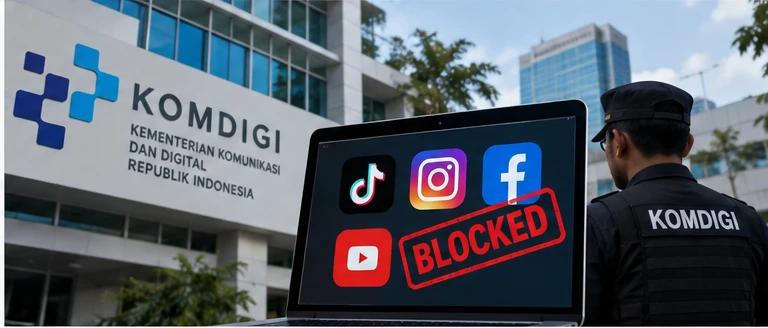
Indonesia’s response combines content removal, investigation, financial intelligence and public education. Komdigi has reported action against websites, social media accounts and influencers promoting judi online, often shortened to judol. Its November 2024 notice documented the closure of two promotional influencer accounts.
PPATK’s role is different: it examines financial activity and reports transaction patterns. Platforms such as Meta, TikTok and YouTube have their own advertising and content-moderation responsibilities. TikTok’s advertising policy sets restrictions on gambling-related advertising, including protections for minors. A written prohibition, however, is not evidence that every deceptive placement is detected immediately.
Enforcement statistics require careful interpretation. Counts of removed posts, accounts, websites and IP addresses are not counts of unique advertisers or children protected. Likewise, a rise in removals may reflect better detection, more offending content or both. A meaningful assessment needs evidence about repeat appearances, time to removal and whether the same promotional routes remain accessible after takedown.

What parents, schools and platforms can check
Parents and caregivers: Ask children what appears in their feeds without assuming that every gaming video is gambling. Look for claims of guaranteed winnings, invitations to deposit money, links that change destination, unfamiliar payment requests and accounts that repeatedly post the same promotional comments. Review app permissions and age-appropriate account settings together. If a child has already paid money, focus first on securing payment access and understanding what happened rather than relying on punishment or shame.
Teachers and schools: Use realistic examples to teach the difference between a genuine game review, a disclosed sponsorship, an affiliate recommendation and a disguised betting promotion. A useful classroom test is to ask: Who benefits from the click? What does the destination actually sell? Is a supposed winning screenshot verifiable? Can a student identify the point at which entertainment turns into a financial solicitation?
Platforms and moderators: Review landing pages, redirects, linked profiles and repeated comments alongside the original creative. Age safeguards and keyword filters can miss offers that avoid obvious gambling terms.
People reporting content: Preserve the account name, public post URL, date and screenshots of the misleading claim and destination, without submitting personal financial information to unknown contacts. Komdigi has identified Aduan Konten as a channel for reporting harmful online content. Reports can also be filed through the platform’s own reporting tools. Avoid forwarding the promotional link to friends or classmates merely to warn them, as that can amplify its reach.
Measures for child-safety reviews
For a school or platform review, track how often gambling promotions appear in youth-oriented feeds, how quickly reports are handled and whether the same accounts or redirects return. A digital-literacy exercise can also show whether students recognise a disguised offer. Report exposure separately from clicks, registrations and deposits.
Frequently Asked Questions
No. An underage viewer may encounter content aimed at a broad or unknown audience. Establishing intentional targeting requires additional evidence about campaign settings, delivery or advertiser conduct.
Yes. Promotional comments, influencer posts, fake testimonials and misleading profile links may carry marketing messages without looking like conventional paid ads.
Do not open the destination or provide payment details. Save the public post information, report it to the platform and appropriate Indonesian reporting channel, and discuss with the child how the content was encountered.