
An online casino loss does not end when the screen closes. If a player takes out an instant loan to replace the money, the loss becomes a bill with a due date. Fees and repayments may then compete with rent, groceries and school costs. In Indonesia, online gambling (judi online, or judol) and digital loans (pinjaman online, or pinjol) can create financial problems that extend beyond the person placing the bets.
A loan taken to recover gambling losses has no reliable source of repayment if the borrower is counting on a win. A licensed lender may provide a lawful product, but licensing does not make that plan affordable.
Why the problem matters in Indonesia
PPATK’s national gambling-flow estimates do not measure household debt: turnover includes repeated circulation, while deposits are not loan balances or net losses. Public data do not show what share of borrowers take loans to fund gambling. Those figures and payment-channel details are covered in the banking analysis; this article follows the household path from a gambling loss to digital credit.

Meanwhile, Indonesia's Financial Services Authority, Otoritas Jasa Keuangan (OJK), supervises licensed fintech peer-to-peer lending, formally known as Layanan Pendanaan Bersama Berbasis Teknologi Informasi (LPBBTI). OJK listed 95 licensed LPBBTI providers as of 31 March 2026. Licensing is a basic verification step, not a guarantee that a particular loan is affordable or suitable.
How gambling losses become consumer debt
A bettor loses money set aside for bills, then borrows through a credit card, personal loan, overdraft or lending app. When the loan falls due, the household still owes the bills plus principal and charges. Taking a new loan to cover the first can turn a temporary shortfall into repeat borrowing and loan rollovers.
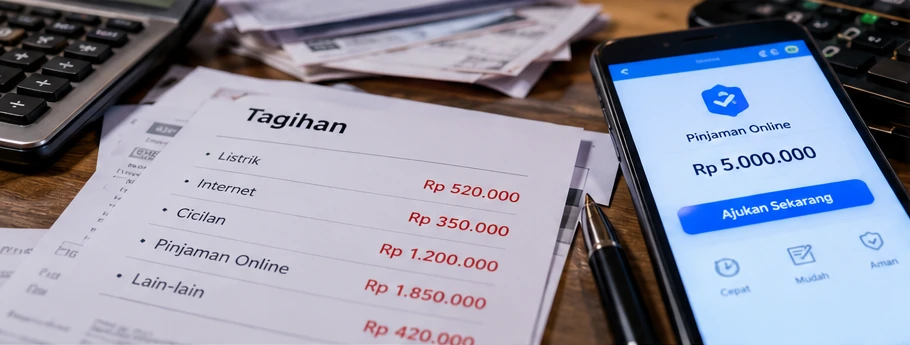
- Loss: gambling expenditure exceeds the amount that can be lost without affecting essentials.
- Liquidity gap: savings, wages or household cash are no longer sufficient for upcoming payments.
- Digital borrowing: an instant loan or another unsecured credit product supplies temporary cash.
- Repayment pressure: principal, fees and interest compete with food, housing and existing debt payments.
- Loss chasing: the borrower may gamble again in the hope of clearing the balance, deepening the exposure.
The sequence is not universal. Many gamblers never borrow, and many borrowers never gamble. Debt may also come first: a person struggling financially might see a bet as a way out, despite the risk of further losses.
A repayment example in rupiah
Suppose a household loses Rp1,000,000 and borrows Rp1,000,000 to replace it. If the loan requires Rp1,150,000 in total repayments, the household must find an additional Rp150,000 beyond the original lost amount. If another loan is taken to meet that obligation, the cash shortfall can continue even when gambling stops. The Rp150,000 figure is an illustrative assumption, not a quoted Indonesian market rate. The actual total depends on the contract, term, applicable charges and lender.
Digital lending: access, convenience and hidden trade-offs
Digital loans can cover legitimate short-term expenses and improve access to credit for people underserved by banks. Trouble arises when fast approvals and repeat offers make borrowing easy at the exact moment a person is trying to recover a loss.

Different credit products create different exposures. A regulated LPBBTI loan may have scheduled repayments and contractual charges. A credit card can accumulate revolving balances. Buy Now, Pay Later (BNPL) divides purchases into future obligations and is not necessarily a cash loan for gambling. Illegal pinjol services may add deceptive terms, misuse personal data or employ abusive collection practices. These products should not be treated as interchangeable merely because they are accessed through a phone.
OJK reported that its illegal-finance task force, Satgas PASTI, identified and stopped 2,263 illegal online lending entities in 2025. The figure describes enforcement against lenders; it does not measure gamblers or show that those entities financed gambling.
What to check before accepting any digital loan
- Provider status: verify the lender directly through OJK's current official directory or OJK Contact 157; do not rely on a logo or an advertisement.
- Total repayment: compare the amount received with all instalments, fees, interest and late-payment consequences.
- Repayment source: use reliable income rather than expected gambling winnings, another loan or a promised bonus.
- Data permissions: scrutinise requests for contacts, photographs and other personal information, especially from unverified applications.
- Existing obligations: include credit cards, BNPL instalments, family borrowing and informal debts in the same monthly budget.
Do not borrow to chase losses, hide gambling payments or refinance an unaffordable loan without a workable repayment agreement. If essential expenses are unpaid because of gambling, another loan usually moves the pressure to a later date.
When gambling debt reaches the household
Household stability and children
Gambling-related financial harm can reduce household savings, delay utility payments, create rent arrears and interrupt education spending. Family members who never placed a bet may still absorb the costs. Shared accounts, borrowed identities and informal loans from relatives can spread financial vulnerability across generations. A parent's financial secrecy may be as damaging to household trust as the amount lost.
Mental health and relationships
Debt collection pressure, shame and persistent uncertainty can contribute to psychological distress, anxiety, sleep problems and family conflict. Problem gambling or gambling disorder requires appropriate assessment rather than a moral label. Some people experiencing severe gambling-related harm may also face depression or thoughts of self-harm; immediate professional support is important when safety is at risk. Financial counselling and mental-health care can address different parts of the same crisis.
Financial exclusion and inequality
Late repayments can impair creditworthiness and make future borrowing more difficult or costly. Repeated defaults may push financially constrained households toward informal lenders, while aggressive debt collection can intensify hardship. Low-income workers, young adults and people with unstable earnings may have less capacity to absorb a loss, although vulnerability cannot be inferred from age or income alone.
PPATK's 2026 social-impact analysis describes consequences observed across Indonesian communities, including families and public institutions. These accounts illuminate possible harms but should not be read as estimates of how frequently each outcome occurs nationally.
Limits of overseas estimates for Indonesian households
Studies using consumer credit records, bank transactions and quasi-experimental methods have examined how expanded sports betting relates to savings, investment, borrowing and financial distress. Gambling-harm research also documents pressures on relationships, health and employment.
US sports-betting markets, UK consumer rules and Kenyan mobile-credit systems differ from Indonesia’s. These studies can suggest mechanisms to examine here, but their effect sizes are not Indonesian estimates.
How to recognise an escalating debt problem
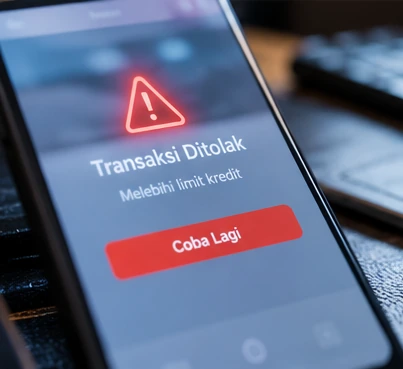
A rising debt balance may not be the first sign. Look for borrowing soon after betting, hidden notifications, frequent payday deposits and one lending app being used to repay another. Check those patterns against income and essential spending.
| Observable sign | Why it matters | Practical check |
|---|---|---|
| Repeated gambling deposits | Small transactions can accumulate unnoticed | Review 30–90 days of bank, e-wallet and QRIS records |
| New loans after betting losses | Credit may be replacing lost household cash | Compare borrowing dates with gambling payments |
| Loan-to-loan repayments | Debt service may no longer be funded by income | List every lender, due date and total balance |
| Missed essential bills | Financial harm is reaching dependants | Prioritise housing, food, utilities and healthcare |
| Threatening collection messages | Possible abusive or illegal lending practices | Preserve evidence and contact the appropriate authority |
What households can do when gambling and loans overlap
- Stop the immediate outflow. Do not borrow to recover losses. Remove gambling apps, disable relevant notifications and use available payment or device restrictions to reduce access.
- Protect essential money. Separate funds for food, housing, transport, school and medical needs from discretionary spending. Where safe and appropriate, agree on a transparent household budget with a trusted person.
- Build one complete debt list. Record lender names, principal, total amount due, repayment dates, overdue amounts and any collection contact. Include formal, informal and BNPL obligations.
- Verify lenders and communicate early. Check regulatory status with OJK and ask legitimate lenders about available repayment arrangements. Get proposed terms in writing before agreeing.
- Report threats and suspected fraud. Save screenshots, transaction IDs and messages. Use official OJK consumer channels for financial-service complaints and contact law enforcement when facing threats, extortion or identity misuse.
- Seek support for gambling behaviour. Financial restructuring will be fragile if gambling continues. Professional mental-health assistance, addiction-focused care and trusted family support can be important alongside debt advice.
OJK provides consumer assistance through Contact 157 and its official website. Verify current contact details before sharing personal information, and be wary of claims that online-loan debts can be erased through unofficial programmes.
What banks, fintech platforms and policymakers can change
Warnings alone will not protect borrowers. Lenders need transparent repayment totals, affordability checks, fair collection practices and safeguards against misleading promotions. Repeat borrowing or missed payments can signal distress, although neither proves that someone gambles. Payment providers and gambling operators can support lawful monitoring and account controls while respecting privacy.

For Indonesian regulators, coordination matters. OJK oversees financial-services conduct, PPATK analyses suspicious financial flows, and relevant government agencies and payment-system participants have roles in disrupting illegal gambling and financial crime. Measures such as suspicious-transaction detection, consumer education, reporting channels and proportionate enforcement address different parts of the problem. A blocked account or website alone does not resolve the debts already carried by a family.
Public reporting should separate gambling deposits from turnover and loan defaults from mere credit use. Useful measures include overdue balances, repeat loans, depleted savings, collection complaints and the share of income spent on repayments. Sharing data for enforcement or risk checks also requires privacy safeguards.
Frequently asked questions
Can online gambling cause debt even without a loan?
Yes. Losing savings or money reserved for essential expenses can create arrears and informal debts. Digital loans may intensify the problem, but borrowing is not required for gambling-related financial harm to occur.
Is every pinjol application illegal in Indonesia?
No. Indonesia has OJK-licensed LPBBTI providers as well as illegal lending operators. A provider's licensing status should be checked against the current OJK directory. Legality and affordability are separate questions.
Can a digital loan be used to win back gambling losses?
Borrowing does not improve the odds of winning. It adds a contractual repayment obligation to an uncertain outcome, making loss chasing particularly dangerous. Money needed for repayment should not depend on a future bet.
Does BNPL count as gambling debt?
BNPL is usually a purchase-financing arrangement, not a direct gambling deposit. However, existing BNPL instalments can reduce the cash available to repay other obligations, so they belong in a complete assessment of household debt.
What should someone do if an online lender threatens to contact family members?
Preserve the messages, verify the lender's identity and licensing, avoid sharing further sensitive data, and report suspected abusive collection practices through official channels. Threats or extortion may also warrant a police report. Do not take another high-cost loan simply to silence a collector.