
Indonesia prohibits gambling. The Philippines licenses some domestic casino and electronic gaming activities, but it has also banned offshore gaming operators. That difference matters when a Philippine-licensed website reaches an Indonesian customer: a licence issued in Manila does not override Indonesian gambling restrictions.
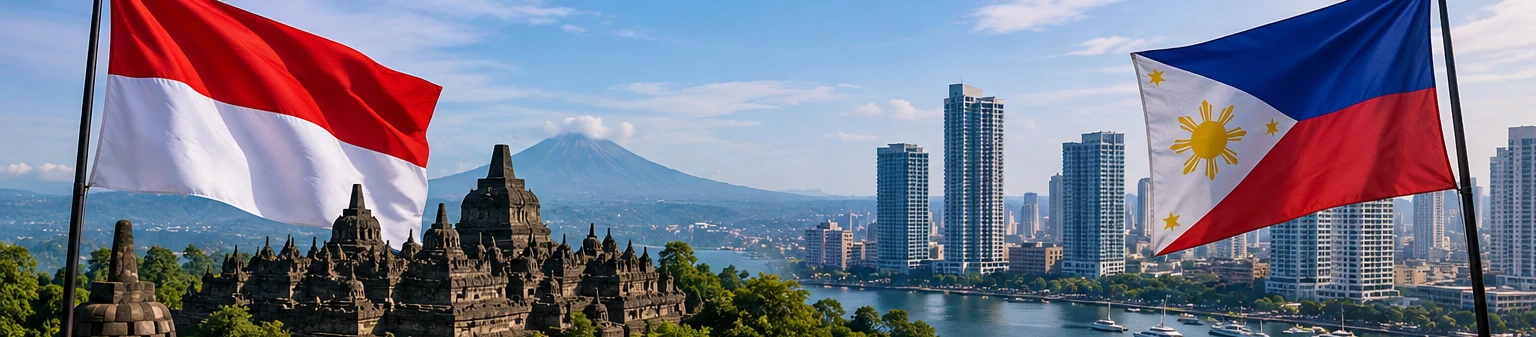
The difference at a glance
| Criterion | Indonesia | Philippines |
|---|---|---|
| Legal approach | Broad gambling prohibition | Selected licensed domestic gaming; offshore operations banned |
| Main authorities | Komdigi, OJK, PPATK and law enforcement | PAGCOR and other Philippine enforcement authorities |
| Online gambling | Prohibited; access and payments targeted | Certain domestic electronic gaming licensed; POGO prohibited |
| Principal enforcement challenge | Mirrored sites, marketing and payment channels | Unlicensed activity and compliance inside the legal market |
| Foreign licence for Indonesian users | Does not override Indonesian law | Does not authorise serving Indonesia |
Why Indonesia prohibits gambling
Indonesia does not offer a commercial gambling licence comparable to the Philippine system. Its Criminal Code (KUHP), including the provisions historically known as Article 303 and Article 303 bis, and its electronic-information laws provide legal grounds for enforcement. Which provision applies depends on the conduct and the law in force at the time. Hosting an online casino, poker game or betting service abroad does not make it lawful for Indonesian users.

The Ministry of Communication and Digital Affairs (Komdigi) blocks gambling websites, apps and promotions. Minister Meutya Hafid has also emphasised the need to disrupt payments and the networks behind the sites. Blocking a domain alone has limits: the operator may move to another address while retaining its payment accounts and advertising channels.
Indonesia’s legal treatment of real-money prediction markets is a separate product-classification question; the documented Polymarket action and its limits are covered in the prediction-market analysis.
How Indonesia follows the money
PPATK analyses suspicious flows, OJK supervises banks and banks apply customer checks or restrictions within their legal duties. These are financial controls, not a licensing system for gambling and not proof of guilt. For payment channels, account-review steps and current figures, see the banking analysis.
For Indonesian users, payment requests to personal accounts or unexplained intermediaries remain a practical warning sign, regardless of the website’s country or currency.
What the Philippines actually allows
The Philippine Amusement and Gaming Corporation (PAGCOR) supervises licensed casinos and specified electronic gaming activities. Its Electronic Gaming Licensing Department publishes regulatory announcements. A licence may cover electronic casino games, e-bingo or sports betting, depending on the operator and approved conditions. It does not automatically cover other products or customers outside the permitted market.

Philippine operators must work within licensing rules that can include identity checks, anti-money-laundering measures and responsible-gaming safeguards. These rules do not eliminate addiction or fraud. A PAGCOR logo on a website is not proof of authorisation; the operator and approved activity must match official records.
Why the Philippines banned POGOs
Philippine Offshore Gaming Operators (POGOs) served customers outside the Philippines. They were distinct from licensed domestic electronic gaming businesses. President Ferdinand Marcos Jr. announced the POGO ban in 2024; Executive Order No. 74 followed. Republic Act No. 12312, the Anti-POGO Act of 2025, placed the offshore ban in statute and repealed Republic Act No. 11590, the former POGO tax law.
Scams, trafficking allegations and security concerns helped drive the reversal. Investigations in Bamban, Tarlac, and Porac, Pampanga, brought the offshore sector under scrutiny. Allegations involving particular facilities, however, do not establish wrongdoing by every worker or operator.
The POGO shutdown affected jobs, rental income and tax receipts, but the Philippines retained its licensed domestic gaming sector.
Regulatory control, public revenue and consumer exposure
Control of access versus control through licences
Indonesia blocks a legal route for commercial gambling operators, but sites and payment routes can move. The Philippines can inspect and sanction licensed businesses; its problem is detecting operators that work outside the licence system. Neither method makes illegal gambling disappear.

Revenue versus exposure to harm
Licensed casinos generate jobs and public revenue, but also bring addiction, fraud and enforcement costs. Prohibition avoids a licensed gambling market without necessarily eliminating illegal demand.
The regional dimension
ASEAN does not issue a region-wide gambling licence. Each member state sets its own rules. Advertising can cross borders, servers may sit abroad and payments may pass through intermediaries. None of that turns a Philippine licence into permission to offer gambling in Indonesia.
What Indonesians should check before trusting a gambling-related claim
- Identify the country whose law applies to the user, not just the company headquarters.
- Verify the operator and precise licensed activity through PAGCOR’s official records; a copied logo is not evidence.
- Distinguish domestic Philippine electronic gaming from prohibited offshore gaming operations.
- Treat requests for identity documents, transfers to personal accounts and guaranteed winnings as warning signs.
- For legal questions or a frozen bank account, consult the relevant Indonesian authority or qualified local counsel.

Common questions
Did the Philippines ban all online gambling?
No. The Anti-POGO Act targets offshore gaming operations. The Philippines continues to regulate authorised domestic electronic gaming categories through PAGCOR, subject to applicable conditions.