
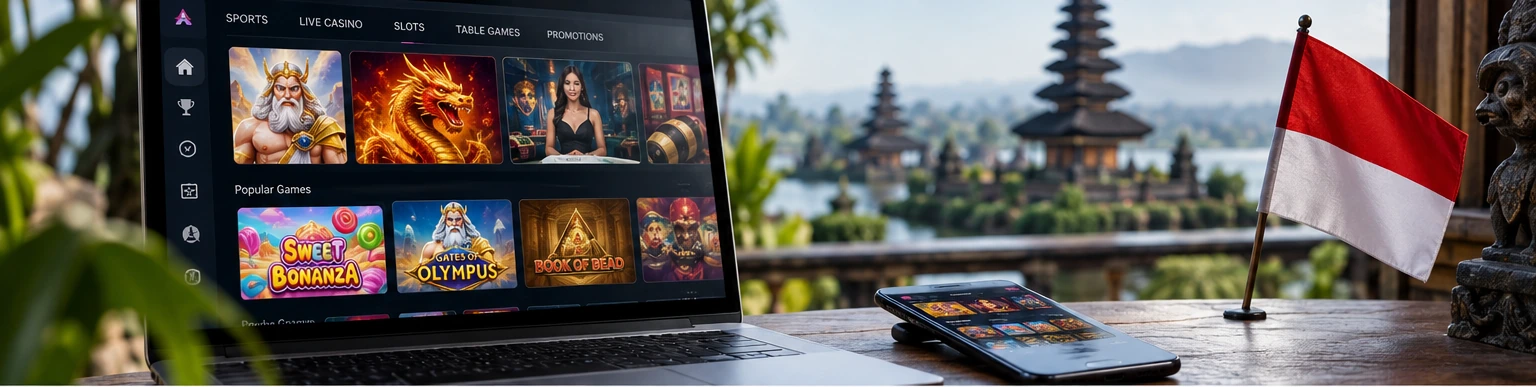
Offshore gambling networks reach Indonesian audiences through a fragmented system of social media promotion, affiliate referrals, local-facing websites and payment intermediaries. The most important distinction is between exposure to gambling marketing and proof that a specific overseas company acquired an Indonesian customer. Indonesian investigations document parts of that chain, but the evidence rarely establishes every participant from advertisement to ultimate owner.
Why Indonesia attracts offshore gambling networks
Indonesia has a large online audience but prohibits gambling. Overseas websites can still be promoted to Indonesian users; that does not make them part of a licensed domestic casino market. A licence issued abroad does not override Indonesian law.
Mobile browsing and everyday digital payments shape how people encounter these offers. They do not reveal how many Indonesians actually gamble or how much an offshore operator earns. Traffic estimates, transaction records and criminal cases answer different questions.
The acquisition chain: from exposure to offshore platforms
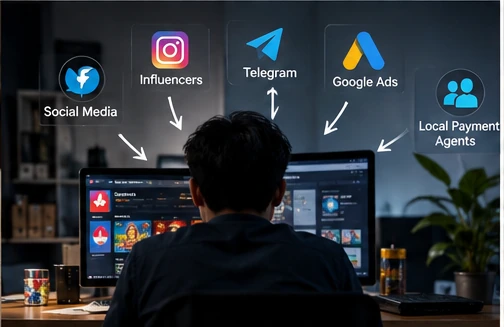
One campaign may involve a creator, an affiliate, a landing-page operator and a separate payment processor. Investigators need to trace each handoff before naming the casino owner or the company that received a deposit.
A takedown records where an offer appeared; a domain restriction records its destination. Connecting those entries to payment recipients and company ownership helps identify who ran the service.
Social media, influencers and disguised promotions
Creator feeds and spam comments can carry gambling offers. Attribution starts with the post: who paid for it, which link it used, who controlled the landing page and where the referral led? Our child-exposure analysis covers the risks specific to minors.
Affiliates, local intermediaries and brand attribution
Affiliate publishers receive fees linked to referrals or customer activity. In the Indonesian market, local-language copy and regional creators can connect a foreign-facing service with local audiences. A named website still needs to be linked to an actual campaign before it is described as targeting Indonesia.
A market directory can generate leads, but a dated promotion and its destination show whether a brand reached Indonesian users. Link the campaign to the operator before treating the listing as evidence of local activity.
White-label suppliers, brand operators and affiliates perform different jobs. Record them separately: the software provider may serve several brands, while an affiliate only sends visitors.
Mobile access, websites and infrastructure

A promotion may reach someone while they browse sports or entertainment feeds on a phone. Its destination can rely on hosting providers, content delivery networks, domain registrars and several web addresses. Komdigi has discussed Cloudflare in relation to gambling-related domains; an infrastructure provider and a casino operator are separate entities.
One network can use several domains, and an intermediary can promote several destinations. Keep domain totals separate from operator counts, then compare restriction records with ownership and payment data to trace control.
Payments: QRIS, e-wallets and financial intelligence
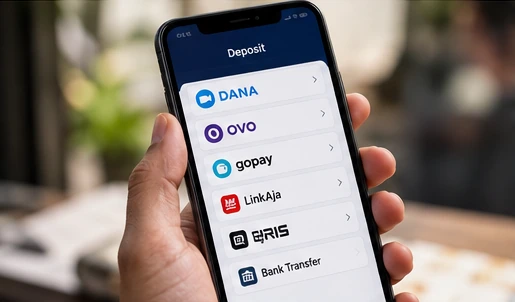
QRIS, bank transfers, virtual accounts and e-wallets are ordinary Indonesian payment channels. PPATK has discussed suspected gambling flows through them. To link a provider such as DANA, GoPay, OVO or ShopeePay to a casino, a report needs to identify a specific recipient or business relationship.
For official totals, payment-channel breakdowns and bank controls, see the banking analysis.
Attributing a campaign to an operator
To trace a campaign, start with four dated records: the promotion, its destination domain, the payment recipient and the company that controlled the service. A missing link leaves the operator attribution unresolved.
Promotions can also expose users to identity theft, account misuse, blocked withdrawals and gambling-related debt. Our banking and household-debt analyses cover those risks.
Tracking promotion over time
Track campaign dates, link paths, domain changes and payment recipients across several weeks. Compare any rise in posts with sports events and check whether the same destinations return under new addresses. A brief spike alone cannot show that market demand has grown.
Frequently asked questions
Are social media platforms gambling operators?
Not merely because promotions appear on them. Platform hosting, advertising, affiliate promotion and operation of a gambling service are different roles.
What records link a gambling promotion to its operator?
Keep the dated post, destination URL, referral data and payment recipient together. Compare them with company and ownership records; a directory listing by itself cannot identify the operator.